
The 9000-Year-Old Shaman of Bad Dürrenberg
A Voice from the Ancestors, Whispering Through Bone and Soil
Beneath the green heart of what we now call Germany—where wild cranes once flew and deer walked unafraid through shadowed groves—there rests a woman whose spirit still hums in the soil. In Bad Dürrenberg, long before the rise of steel and stone cities, before the wheel or the plough, our kin lived as one with the forest, with beasts, with bone, with sky.
She was laid to rest some nine millennia ago, this woman between 25 and 35 winters of life. But she was no mere villager, no simple gatherer or weaver. She was something more—guide, healer, keeper of memory, knower of paths between the worlds. A shaman.
Unearthed by Chance, Remembered by Will
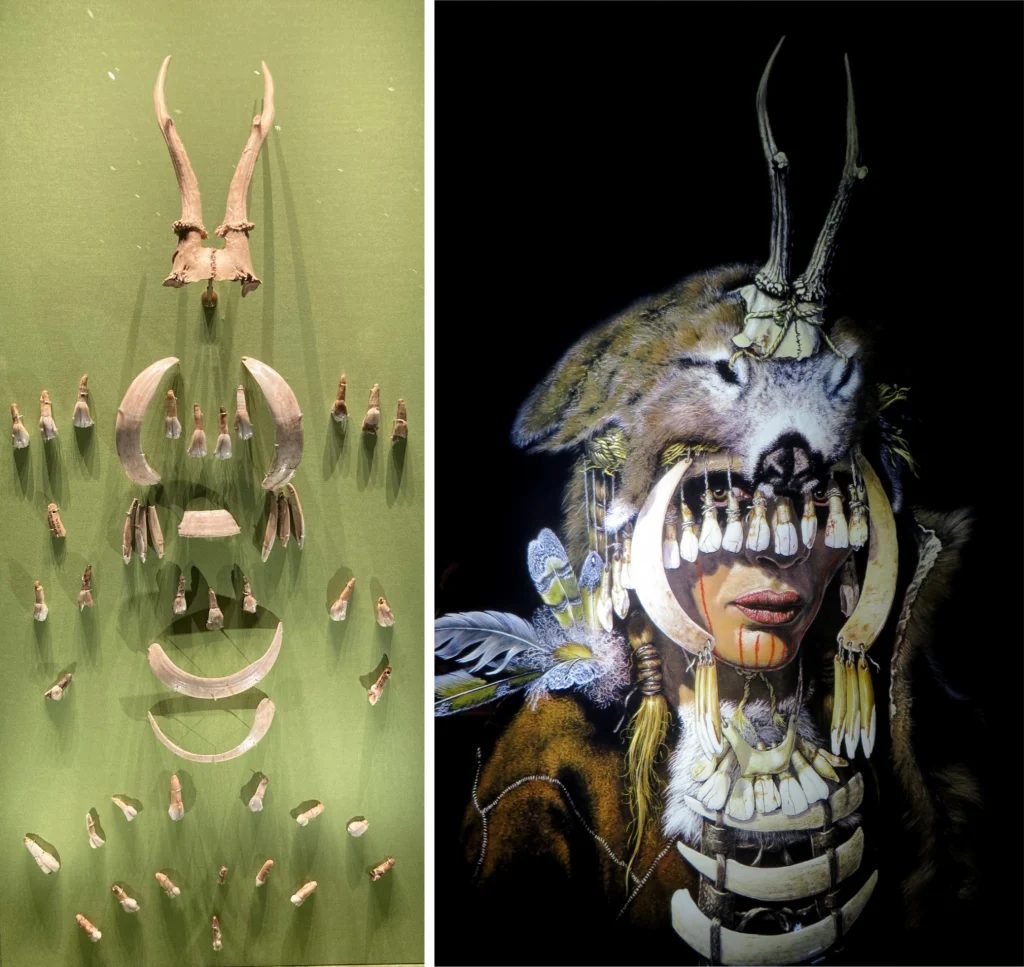
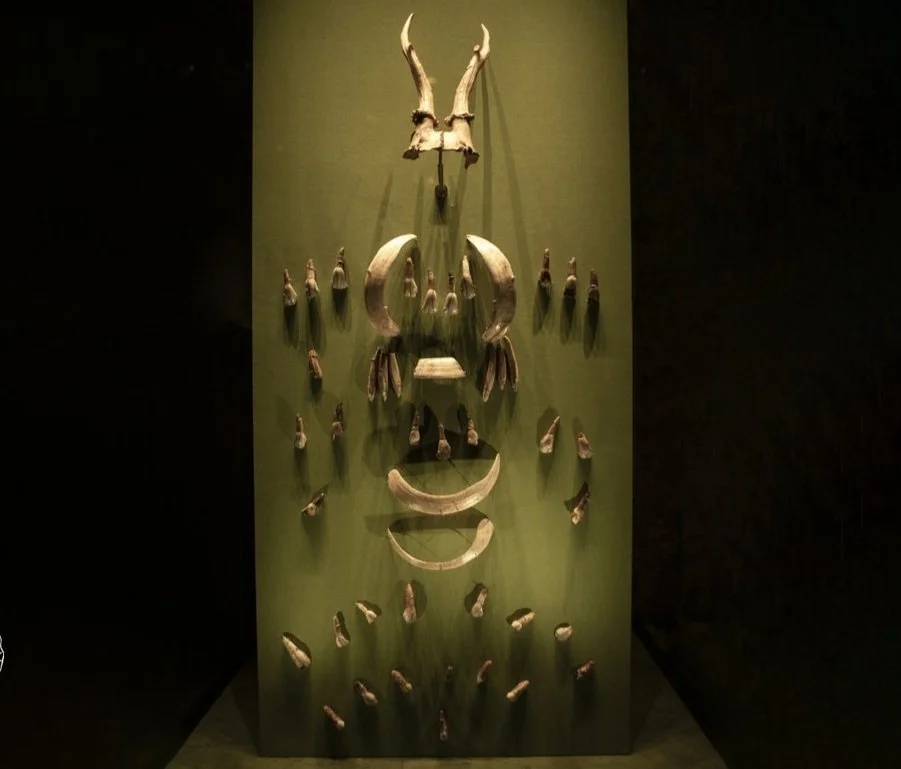
Her resting place was disturbed in the 1950s—not by intention, but by modern machines carving through the earth for construction. Yet the Old Ways have a habit of making themselves known when they are needed most. The moment her grave was opened, even those who no longer hear the land could tell—this was not ordinary. Her bones were arranged with care. Objects of power were set near her. And on her head, the most striking relic of all: a headdress wrought from the remains of animal kin.
A Crown of Beasts, Bound to Spirit
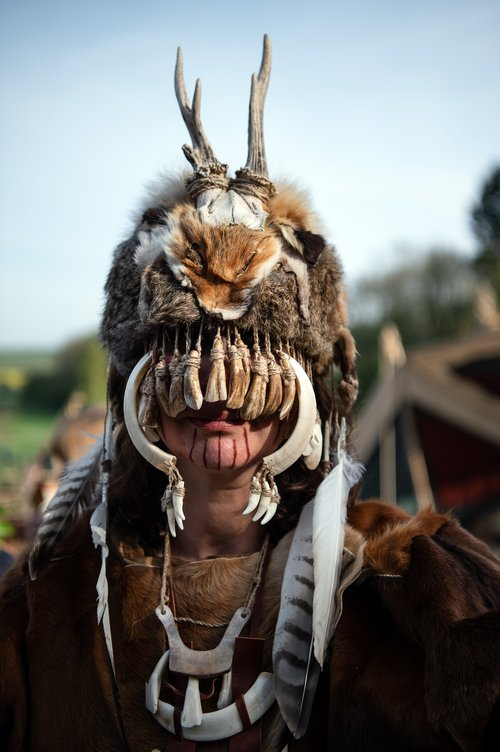
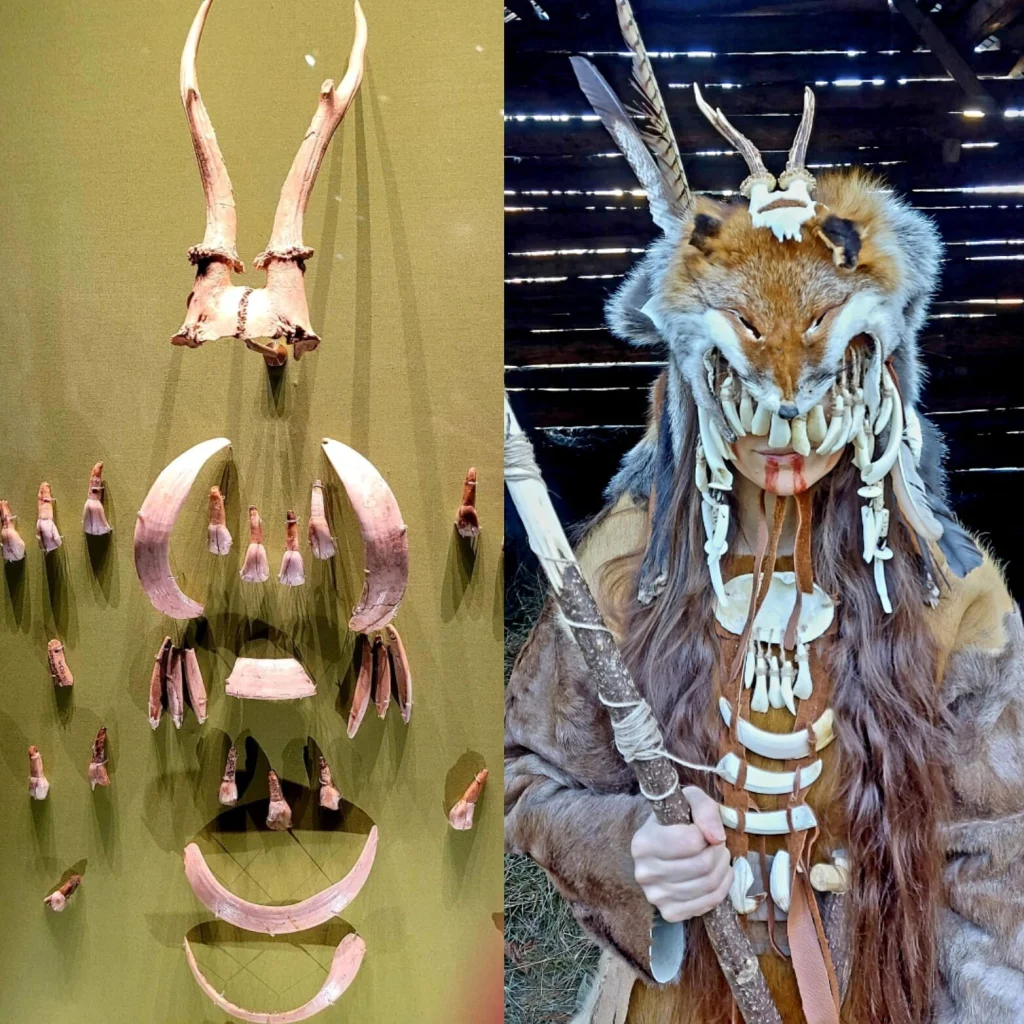
The headdress she wore is a tale in itself. Not merely decorative—each element was chosen with deep purpose, honouring not only the animal, but the living forces they represent. The weave of spirit and bone told of her sacred bond with the creatures of the forest, sky, and water.
-
Deer bones and teeth: The deer, with its silent grace and ever-renewing antlers, speaks of fertility, transformation, and the quiet watchfulness of those who walk between worlds.
-
Wild boar tusks: The boar, fierce and unyielding, symbolized courage, the wild heart, and the power to charge through obstacles. It gave her the strength to protect her kin, in body and spirit.
-
Crane bones: The crane dances between realms, long-legged and sky-born. It is a messenger bird, a walker of thresholds, and its presence in her crown marks her as one who knew the language of wind and shadow.
-
Turtle shells: Turtle, the silent elder. It teaches patience, endurance, and the still wisdom of the earth. Its shell cradled her thoughts, reminding her—and us—of the enduring line that binds generations.
This was no costume. It was an emblem of her role: bridge between spirit and tribe, vessel for healing, memory, and truth.
A Life in Service to the Clan and the Earth
In the world of our Mesolithic ancestors, a shaman was not a priest but a guide. One who could read the song of the fire, who knew which roots brought healing and which dreams brought warning. She would have sat with the dying, sung over the newborn, and walked out alone beneath the moon to listen to the voices of the forest.
That she was buried with honour—her grave carefully prepared, her headdress untouched—is a testament to how deeply she was revered. This was not just a death. It was a return to the roots of all things.
Echoes of Our Ancestors
From her burial we learn much—not just of her, but of the world she lived in. A world where nature was not tamed, but revered. Where the animals were teachers and allies, not resources. Where every stone, every tree, every ripple in a pond was seen and felt as alive.
These people, our kin of blood and bone, held a worldview shaped by kinship and rhythm. Her grave is proof that long before modern civilization, our ancestors held beliefs as deep and complex as any that followed.
Still She Speaks
Today, her remains and the sacred items that journeyed with her rest in the care of scholars. Through bone analysis, isotope tracing, and ancient DNA, we learn more with each passing year—about her diet, her health, and her place in the long journey of humankind.
Yet no amount of lab work will ever fully capture what her people knew in their marrow: that she was chosen by the land itself.
She stands now as a whisper from the misted past. A voice calling us back to older ways—ways where humans did not rule the land, but lived as one strand in the greater braid of life.
Let her memory be honoured. Let her headdress remind us that our ancestors walked with power, with grace, and with deep, bone-deep reverence for all that lives.