Voyageur Toque Hat
Long before the well known Mountain Man period of North American History, there was the much less advertised and romanticized Voyageur and Courier De Bois. Rugged men from Europe coming to North America seeking riches by trapping, transporting, and selling fur to be sent back to Europe for hats and clothing.
The voyageurs and Coureurs Des Bois of early Canada were not dressed for comfort in the modern sense. They were dressed for function. Their lives depended on what they wore, how it held up to water, cold, wind, and constant use.
Among their clothing, the wool toque stood out for its simplicity and reliability.
Originally brought over by French settlers, the toque had its roots in rural European working-class life. It was a practical cap—knitted from wool, easily repaired, and able to retain warmth even when damp. When these settlers and traders came into the harsh and unpredictable environments of North America, they adapted what they knew.
The result was the Canadian toque.
Voyageurs spent long days paddling heavy freight canoes across vast waterways, often soaked from spray, rain, or snow. A hat that could keep warmth even when wet was not optional—it was essential. Wool, unlike many modern materials, continues to insulate even after absorbing moisture. That alone made it invaluable.
The toque was also simple to produce. It didn’t require complex tailoring or specialized equipment. It could be knit at home, repaired in the field, unraveled and remade if necessary. In a life where gear had to be carried, not replaced, that mattered.
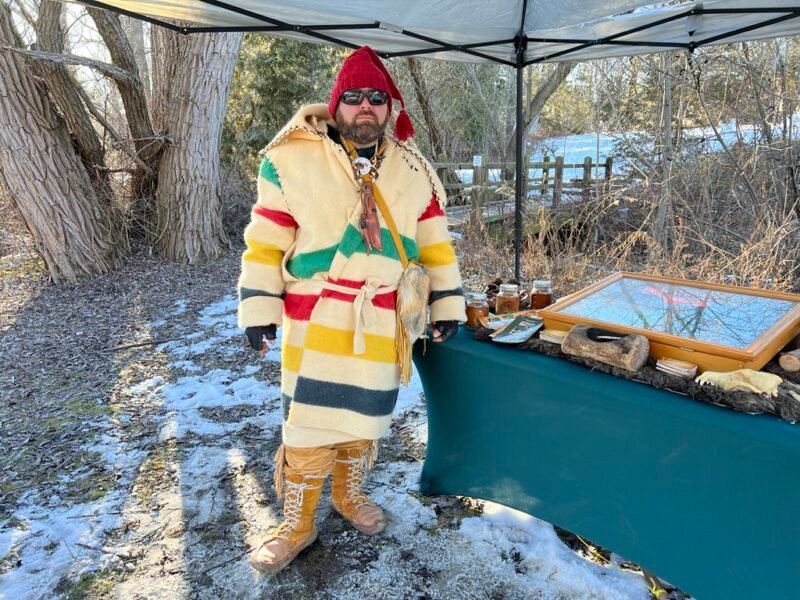
It also became part of a recognizable identity. Alongside the capote coat, sash, and moccasins, the toque formed part of the working uniform of the voyageurs. It was worn pulled down over the ears in the cold, pushed back when working hard, or left loose when resting. The long, soft form allowed for flexibility depending on the moment.
Why Red?
The deep red color most associated with the voyageur toque was not chosen for fashion. It came from the dyes available at the time.
Voyageur and habitant toques were made in whatever wool and dyes were available. Other colours which have not been preserved in Voyageur mythos included Natural wool tones, Off-white, cream, grey, brown, sometimes even undyed—straight from the sheep.
Colours such as Blue using indigo dyes, Black, or very dark brown made by overdying wool, or even green which was much more expensive because it was a difficult dye to produce.
👉n reality, Voyageurs would have had a mix of these, not just uniform red. Whatever was available and inexpensive at the time would have been purchased.
Natural dye sources such as madder root and cochineal produced rich, lasting reds. These dyes were widely used in textiles that were traded and transported across Europe and into the New World. As a result, red wool became common and accessible.
Over time, that color became associated with the people who wore it. Not by design, but by repetition.
The red toque became something recognizable on the landscape—a flash of color against snow, forest, and water.
A Living Tradition
What’s important to understand is that the toque was never frozen in time.
It changed. It adapted. It remained in use long after the fur trade era ended. Farmers, woodsmen, laborers, and outdoorsmen continued to wear it because it worked. It still works.
Even today, in a world of synthetic materials and factory-made gear, a wool toque holds its place. Not because it is nostalgic, but because it is effective.
And because it carries something forward.
The One That Was Made for Me
The toque I wear now began as a skein of deep red wool I picked up from a local shop.
It wasn’t cheap. It wasn’t synthetic. It was real wool, hand-dyed in small batches—the kind of material that feels alive in your hands. The kind that, even before it becomes anything, already has weight to it.
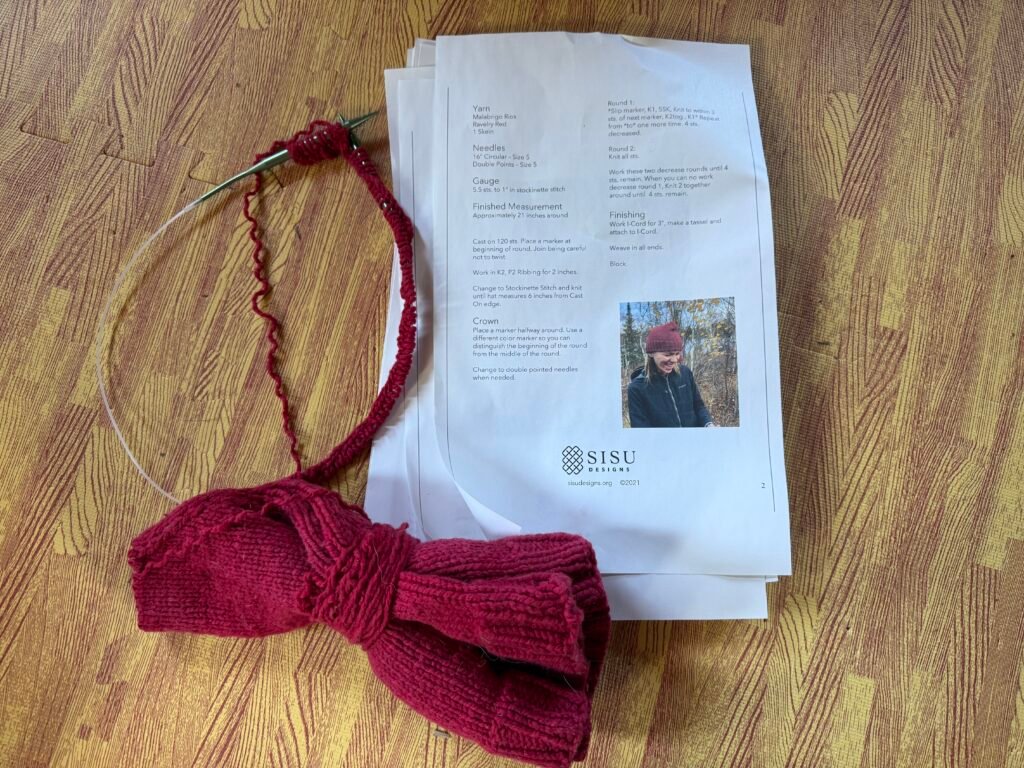
I brought it home, and my mom started knitting.
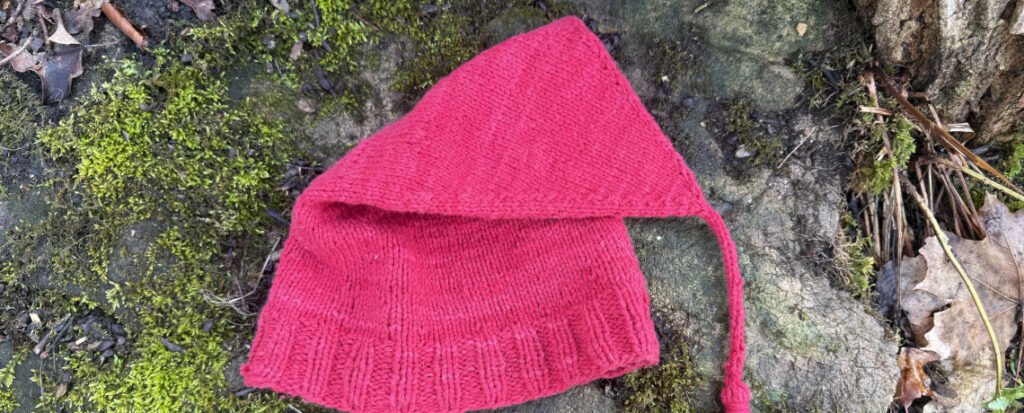
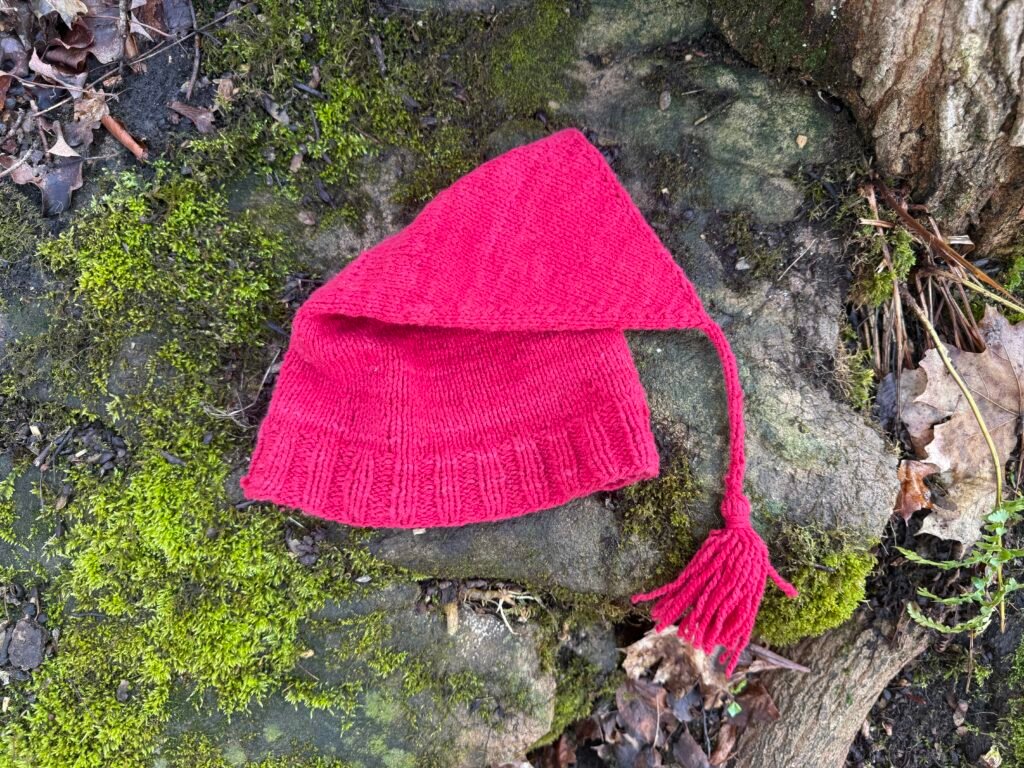
She was making me a traditional voyageur-style toque—long, simple, practical. Something that would fit the way I live, the way I work, the way I move through the woods.
When she finished it the first time, it didn’t fit right. It was too big.
That’s part of knitting. It happens. I wore it a couple of trade shows because it was a beautiful piece, mis-sized and all.
So she did what knitters have always done. She unraveled it and started again.
There’s something important in that act—taking apart your own work without hesitation, not because it was wrong, but because it wasn’t right yet.
She cast on again. Same wool. Same intention. Just corrected.
She was working on it the day she died.
When I found it, it was still on the needles. Mid-stitch. Not finished. Not abandoned. Just… paused.
I didn’t try to finish it myself as I had no idea how to knit. Something that was pretty common and unthought of for the most part became sacred. She would never be able to finish the toque for me, and it was working on during her unknowingly last day on Earth.
Eventually, someone from my community volunteered to finish the toque for me.
She took the toque, carefully unraveled it—again—and rebuilt it to fit me. Not erasing what had been done, but continuing it. Respecting the pattern, the material, and the reason it had been started in the first place.
She finished what my mom had begun.
Wearing It
The first incarnation of the hat was worn at the Richmond Hill Winter carnival where I had a booth for Barefoot Bushcraft showcasing archery and primitive skills. I really love dressing up in historic clothing such as the Capote jacket and resembling a character of the past. The hat was too big, but I wore it anyway as it was warm.
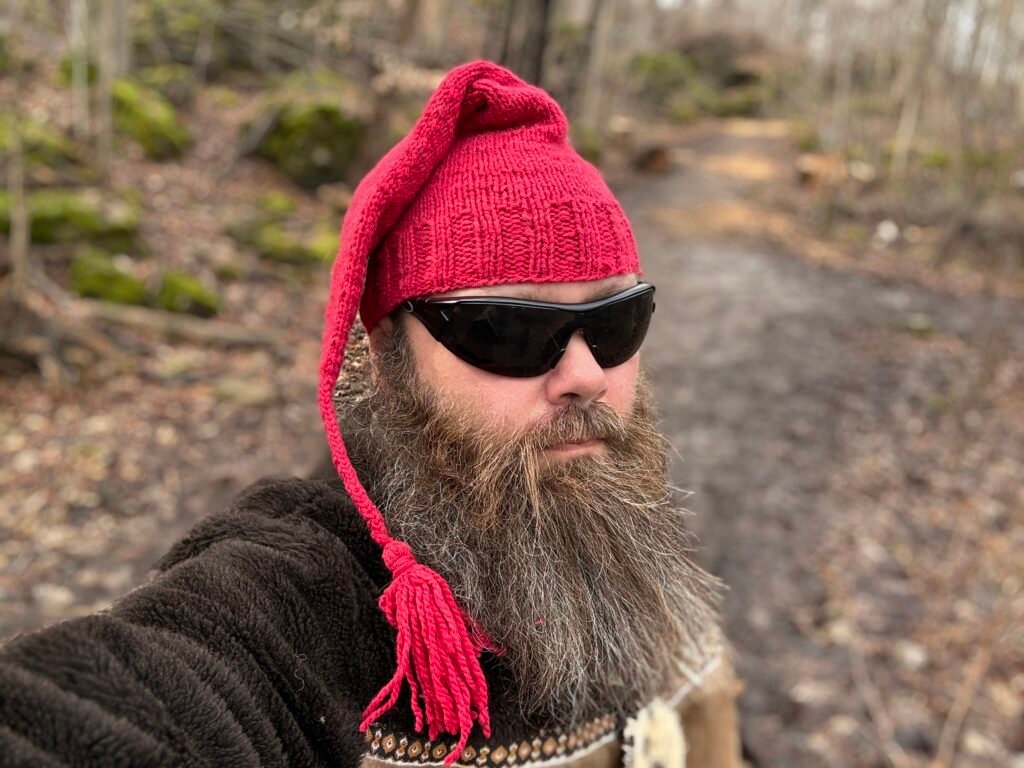
The current incarnation of the hat was worn in much a more normal, everyday way. Working with students teaching outdoor skills.
That felt beautiful but sad. It was made to be worn. To be used. To be part of real life, and death to a degree.
Out there, doing what I do, it settled into place.
There are three sets of hands in that toque now.
Mine, for choosing the wool.
My mom’s, for starting it—and starting it again.
And the woman from my community, for finishing it.
That’s what gives it weight.
Not the brand. Not the price. Not even the history, as deep as that history is.
It’s the continuation.
More Than Warmth
The voyageur toque has always been a practical thing. A working piece of clothing built for harsh conditions and long days.
But like many things that are used honestly over time, it becomes more than its function.
It becomes a record.
Of where it’s been.
Of who made it.
Of what it has carried.
The one I wear now still does what it was meant to do. It keeps me warm. It handles the weather. It holds up to use.
But it also carries something else.
And every time I put it on, I know exactly where it came from, made by my mothers own hands. Sometimes it releases a wave of tears and grief, but I wear it with pride and happiness as an emblem of the past both in my own life, and overall history.